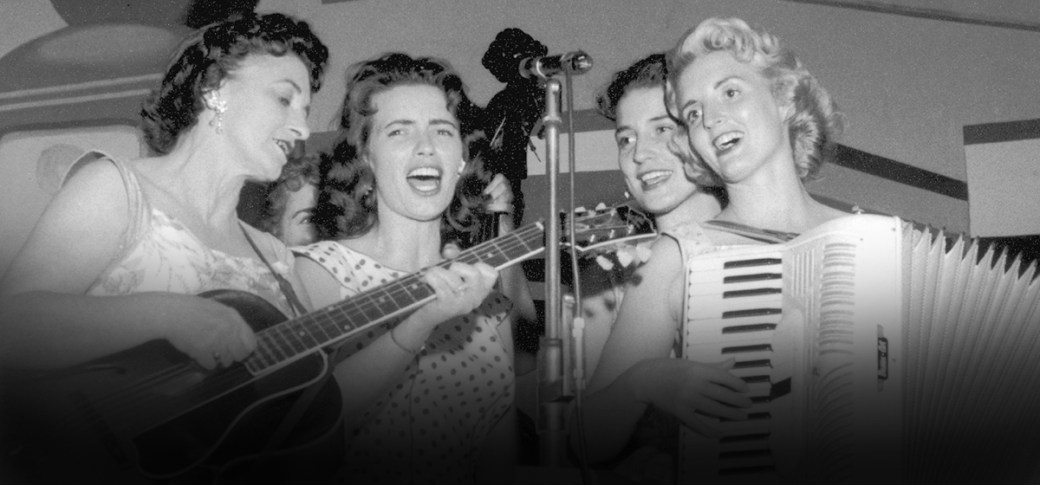
Invented in 1829, the accordion came to North America early on, and as westward expansion took place, was heard in the mountains and bayous….in cities, towns and in the country….in the deserts of the West and Mexico…. on the Great Lakes and the Great Plains…in all states, estados and provinces….North to Alaska and West to Hawaii. For more than 150 years, the accordion was a musical instrument “of the people”, of inclusion and belonging, and brought folks together as they settled an entire continent..
Part I
Some of the first to become proficient on the accordion were French speaking Creoles in or near New Orleans, Louisiana, shortly after the instrument was invented.

Creoles were often classically trained musicians who provided entertainment at white “house concerts”, dances and elegant parties in Louisiana.(Ken Burns, “History of Jazz”)

The accordion was radically different. The bellows provided the “lung power” and women loved this light weight, expressive musical instrument and would often gather in parlors to make music together.
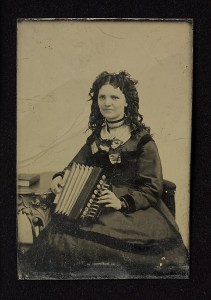

The piano accordion evolved from the bisonoric, diatonic “button box”, a closer kin to the harmonica, into a unisonoric instrument. The piano accordion is different because one key sounds only one note, whether the bellows is pushing or pulling air through the instrument’s reeds. Along with the piano keyboard, the innovative Stradella bass section was added, which used preset chords. Because of these features, it was easier to master the piano accordion, and sales of the instrument quickly overtook the “button box”.

The accordion was portable and loud enough to be heard from front porches, at weddings, social gatherings, dances and as entertainment in theaters and taverns.

The piano accordion was played by European immigrants….


….And played by sons and daughters of immigrants

It was popular in live stage productions in Vaudeville

and heard in early recordings of Gospel, Blues and the Boogie Woogie………

Amede Ardoin
Amede Ardoin, a tiny Creole diatonic accordionist beloved in Louisiana, was highly influential in the development of Cajun/Creole music. Ardoin died from injuries received by a white racist mob after being invited to perform at an all white dance in Eunice, LA. This horrific crime was heartbreaking, never punished and influenced Creole musicians to withdraw from the diatonic accordion, leaving it to remain the domain of white and Latino musicians until only relatively recently.

PART II: THE PIANO ACCORDION
The 1940’s
During World War II, the piano accordion was included in many “big bands” that accompanied dances. After the war, the working class and returning soldiers became nostalgic for their ancestral homelands and the sound of the accordion they heard while in Europe. The Catholic Church formally deemed the piano accordion respectable in 1947 and allowed its use at Mass. As many manufacturers of the piano accordion appeared across North America, the instrument became more affordable and a surge in demand fed instrument sales and lessons. Americans were back at work and musical instruments in the home were signs of success.
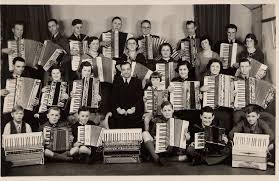
Performing with the piano accordion was encouraged and promoted as the key to becoming well rounded and popular.

Some Roots musicians already had included the accordion in their bands.

Helen Carter was the accordionist for Mother Maybelle and the Carter Sisters.

Wilene “Sally Ann” Forrester, was an accordionist and already a seasoned professional singer, fiddle player and pianist when she was hired by Bill Monroe to perform and record with Bill Monroe and his Bluegrass Boys….
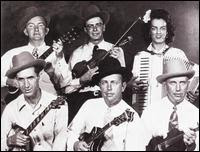
Pee Wee King elevated and transformed “Hillbilly Music,” into a completely new art form, “Country & Western” music. It evolved from a string based, roots music brought to America by the Scots-Irish who emigrated in large numbers from 1718 to 1750. Each member of “Pee Wee King’s Western Swing Band” was required to read music, join the musicians union and included as among the most polished musicians in the business (Pee Wee King, “Hell Bent for Music“). They were the first to wear the spangly Western outfits that came to be associated with the Country & Western aesthetic.

Pee Wee King changed and also combined both Country music and Western music under “one roof”, in the city of Nashville, Tennessee. He used the accordion and along with Bob Wills, the electric guitar and added drums and amplifiers. With Redd Stewart, his lead singer, Pee Wee King co-wrote “The Tennessee Waltz,” which became the state’s official song.

The 1950’s
The piano accordion was present in every genre of American music, especially Country Music.

By the 1950’s, The big band dance scene died off , but small combos in swanky clubs often featured the piano accordion, and it became synonymous with “class”.


Dick Contino was just a teenager when he earned $4000 a week as he toured as the “World’s Greatest Accordionist”. He was a genuine star who had a brief film career. However, he found himself in the middle of a military draft fracas when he was required to report, but could not be found. Contino served in the military but was persecuted in the headlines as a “draft dodger”, even though he was not. When honorably discharged from the Army, he performed for fifty years and was the most frequently included guest on the “Ed Sullivan Show”.
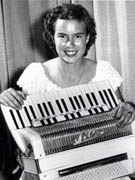
In 1952, Texan Pauline Oliveros arrived in San Francisico as a college student. Oliveros was eventually a co-founder of the Center for Contemporary Music and has been noted as being one of the most influential composers and music philosophers of the Twentieth Century. Although obscure to pop, folk and country music fans, she is credited as an early pioneer of electronic music and also as an important influence in contemporary and “new” music.

By the 1950’s, on a new medium called “television,” America watched as creative and successful Americans were “blacklisted” for alleged participation in extremist political beliefs. Artists were targeted and it was preached that their work threatened the morality of America. Some were ruined, others left the country to make a living or left the business.
In September, 1955, a television variety show, hosted by a bandleader/accordion player, became a prime beneficiary of uncertain times. The show promoted an innocuous “sweet” brand of music and was modeled after a variety show from a previous era. The show was seen as a solution to allow “good” Americans to find comfort and escape from “bad” music, once more. As anticipated, the show was an instant hit and remained on television for decades and still airs in re-runs. A large segment of America found the show reassuring, but other viewers saw the band leader’s signature piano accordion as the symbol of artistic oppression and backward thinking and even saw it as racist. They developed a negative attitude toward the piano accordion that endured from 1955 until recently. When most of America chose to move forward musically and culturally, the piano accordion was left behind.
The 1960’s

1965: The Year of the Tiger

The “Tiger” was produced by the Titano Accordion Company as a ‘last gasp’ attempt to inspire relevancy in the piano accordion with the addition of a slanted keyboard, bright colors and other features. It was hoped that the new look and sound options would set the instrument on a more current path. In 1965, the “Tiger” was a good product with the best intentions behind it. The accordion industry really needed some smart decisions that could help the piano accordion overcome a decade of negative attitude and falling sales.
But, from 1955 until 1965, the accordion industry ignored the dominance of the youth market, the emergence of women musicians and the influence and popularity of African Americans in the fast-changing worlds of pop and jazz. Like most mainstream companies, to avoid controversy and remain politically neutral during the Cold War and the Viet Nam war years was seen as the best course for business. Because of this, Titano deliberately chose not to acknowledge folk, blues and jazz musicians who dominated the music industry during the mid and late 1960’s. They were young, usually male, long haired, anti-war and anti-establishment. Many were forward thinking musicians and some were associated with taking drugs. Not all among them were guitar players. Some keyboard players had deep experience with the piano accordion and could have endorsed the “Tiger.” Garth Hudson, for example, keyboardist for “The Band” with Bob Dylan, was a proficient accordionist. Clifton Chenier was very popular as was zydeco music, at that time. JoAnn Castle would have been a very good choice, but as a woman, she was clearly second class in their eyes to the white male that they quickly chose. Out of fear, instead of any or all of the above, Titano and the accordion industry thought they had made a safe choice to endorse the “Tiger”: “the one and only” white male accordion player from the variety show who, by then, was in his mid 40’s. With that mistake, Titano opted to reinforce the intended market for the well built and radically designed instrument as ultra conservative, over 40, white and male. Ironically, these types did not find the “Tiger” appealing. So, predictably, Titano’s “Tiger” did not sell, production ceased and Titano went out of business.
The “Blue Accordion” is a vintage Titano Tiger, recently acquired by accordionist Mark Yacavone.
But, the piano accordion was used by influential musicians in the late 1960’s and beyond:

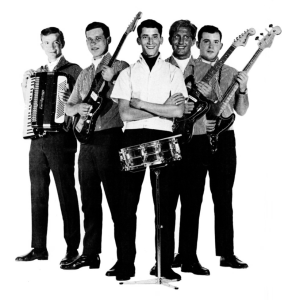

The 1970’s

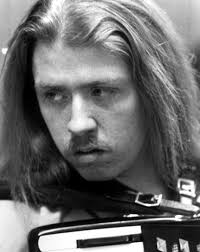
As a child prodigy on the accordion, Danny Federici won “Ted Mack’s Original Amateur Hour”. He graduated from high school, co-founded a band in 1969 and enlisted a young Bruce Springsteen as his lead singer. Danny performed for nearly 40 years with The E Street Band.

The 1980’s

Stanley Dural was a break through artist for the piano accordion and was well known in New Orleans as a Blues organist even before associating himself with the piano accordion or zydeco music. Stanley Dural continued the blues tradition as Buckwheat Zydeco.

Singer/Songwriter Tom Waits has been a prominent advocate of the accordion in his performances and recordings since the early 1970’s.

Fast Forward

2012


Out of the Phoenix Valley rose Arizona’s own homegrown band, KONGOS, 4 brothers born off shore, but raised and educated in Scottsdale, AZ who composed and recorded the most successful, piano accordion-based hit song, “Come With Me Now.” It shattered all records, blew the roof off of perceptions about the instrument, and earned Johnny Kongos and his brothers much success and a world wide following.

Also, 2012 was the year that Bill Haley’s group, the Comets, along with Johnny Grande, were recognized by their induction into the Rock & Roll Hall of Fame.

Bruce Springsteen’s E Street Band, co-founded by the late Danny Federici in New Jersey in 1969, were inducted into the Rock & Roll Hall of Fame, in 2014.
Not the end…….

 Accordion Americana